
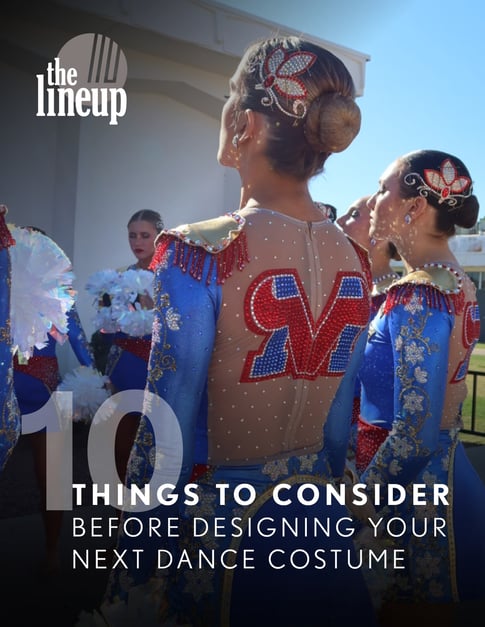
Team: Mountain View Toro Pom
Looking for inspiration to start designing your team's dance costume? This guide outlines 10 items to know before you begin shopping for or designing your new look!
1. Budget
Your budget has the most significant impact on your costume design. It'll help you determine where to start looking and what type of design you can afford.
What's more important to you: budget or design? Maybe you love the idea of a costume covered in appliques, but the price tag is out of budget. Would you rather pay more to get the full package, or compromise (or DIY some elements) to stay within budget, while still ending up with a spectacular costume?
2. Quantity
The number of costumes (or dancers) is important in determining your budget. It will tell you if you’re eligible for group discounts (the more you order, the greater the group discount), how much you can spend per costume, and if you meet any minimums for custom group orders.
3. Time Frame
You may have a great idea, but do you have time to pull it off? Usually, the more you customize your costume, the longer the lead time. Here’s a general guideline of your costume options from a variety of vendors based on timelines:
2-10 Weeks: Shop ready-to-wear fashion, in-stock styles from catalogs.
8-12 weeks: Shop costume catalogs, or customize a made-to-order style with your choice of colors. This extra time allows for your costume to be made.
9-14 weeks: Design a custom costume from scratch, or consider any of the above options! A longer lead time will allow for extra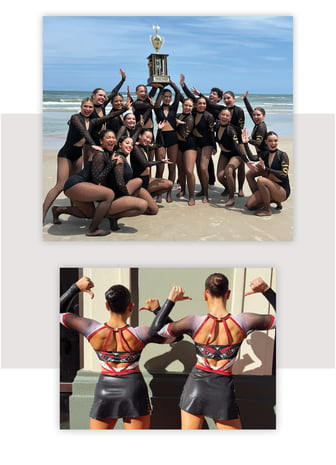 steps like design illustrating, patterning, sample making, and production.
4. Your Concept or Theme
The best performances bring the costume, choreography, and music together into one clear theme, creating a cohesive package!
What message do you want to convey to the audience? It's essential to know this before you start designing your costume! Here are a few tips on how to pull your concept together:
- Start with the music: This is the most important element in setting the tone and direction for choreography. Send your music to your designer!
- Create a mood board: Include costume inspiration photos, color palettes, fabrics, and more. This will help you focus your theme and get organized.
- Use words and phrases: How would you describe your concept in a few words or a short phrase? If a decision comes up about your routine, remember this phrase and use it to help answer any questions.
Come to your design process with as much information as possible about your concept and theme up front so your designer can fully bring your vision to life! It'll give you both a clear direction and make the process easier and more concise!
5. How your Costume can enhance your Choreography
Some of the best performances we’ve seen find a way to incorporate the costume into the choreography, in addition to the overall theme. Some classic examples include:
• COLOR CHANGE ARMS: Highlight arm movements in pom choreography.
• COLOR CHANGE FROM FRONT TO BACK: Emphasize formation changes.
• LEG STRIPES: Highlight your lines in kick routines.
• TRANSITION COSTUMES: Create a dramatic change mid-routine.
• FLOWING SKIRTS: Add grace and enhance jumps and turns.
• UNITARDS: Emphasize legs and arms.
• NEW IDEA?: Let us hear it! We LOVE trying new things.
6. The Decision-Makers
Who is the decision-maker for your team? This is the person who ultimately pulls the performance together. They don't just determine the costume design, they also decide the music, choreography, and select the team.
We recommend limiting decision-makers to one to three people during the design process. Too many opinions can lead to indecision and confusion for everyone!
Decision-makers are usually the coach and assistant coaches, but choreographers play a key role too. If including your captains pushes the group past three, get their input before and after the design meeting instead.
7. Fit and Aesthetic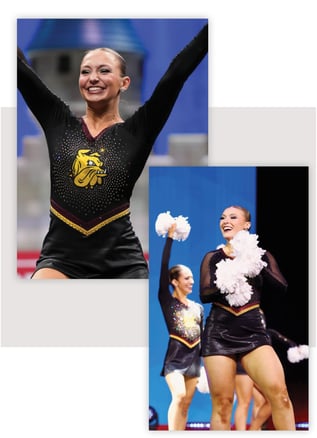
Some costume elements will change depending on the comfort levels of your dancers, parents, and team leadership, as well as the level of support your dancers need to wear under their costumes. Some modesty considerations include:
• TWO PIECES VERSUS A LEOTARD: Do you want stomachs to show?
• BOTTOMS: Do you want regular briefs, modest briefs, shorts, leggings?
• OPENNESS: Do you want skin showing in an open back, or is it better to add nude illusion or a bra band?
• MESH: Do you want to line mesh pieces, or leave them unlined?
8. Range of Dancers: Size, Skin Tone, and Gender
All three of these can influence your costume design. Here's how:
- Size: Does your team span a range of ages and sizes, from kids to adults to extended sizes? Not all catalog styles come in both child and adult sizes, so this may narrow your options. Custom costumes usually offer a wider size range, but may cost a little more for patterning.
- Skin tone: If you're using nude illusion fabrics, check what color options your apparel provider offers. Best practice is to match each dancer's skin tone rather than outfitting everyone in the same nude shade.
- Gender: The Line Up specializes in designs for both female and male, whether you want looks that match perfectly or compliment each other creatively. We'll work right alongside you to bring your vision to life!
9. Competition Rules
Many state competitions have strict costume rules, so make sure you and your designer is in the know! Rules can regulate details like showing bare midriffs and collarbones, if shoes must be worn, or even what type of embellishments (like rhinestones and fringe) you can use. The Line Up will work with you to ensure that your costume meets all requirements.
10. Competition Backdrop
What does your competition floor or backdrop look like? Will your costume and dancers blend in or contrast? This can completely change the visual appearance of your dance! For example, white shoes on a black floor will highlight the feet and make their movement more pronounced (for better or for worse!)